
segunda-feira, 11 de março de 2013


sábado, 22 de maio de 2010
Dreams
...of singining with a long fingered, brown furred marsupial.
Now that I think of it, it's probably influenced by the documentary of Sigur Rós I watched last night. At least the singing. the marsupial is still freaking me out though.
segunda-feira, 22 de março de 2010
Escalada Para Todos

Sigam para:
Entrem na secção de Desporto;
Vejam o video "Escalada para todos" do dia 21-3-10.
quinta-feira, 11 de março de 2010
We can wish for more hours in a day, but we’re only going to get 24, so it’s up to us to decide how we want to spend them.
From: getrichslowly
Everyone has a different way of wasting away the hours, but I’ll identify some common ones. In the online world, there are countless time-sucking activities, such as:
- Checking e-mail excessively (OCD!!)
- Seeing what’s new on Twitter
- Reading Facebook updates (devia apagar aquilo)
- Reading blogs that don’t deliver much value
- Browsing retail sites
- Playing games
- Watching funny YouTube videos
- Clicking on random articles on StumbleUpon
- Tagging and grouping your Flickr photos
- Googling your ex
Time sucks aren’t only found on the internet, though. Offline, activities that can suck your time include:
- Unimportant chores
- Watching TV shows you don’t even like that much
- Reading junk mail
- Video games
- Opening the refrigerator door and staring at the contents (tanta vez! :P)
- Thinking about unimportant things, replaying conversations in your head, stressing out about future possibilities that may or may not ever happen
- Organizing your iTunes files
- Unproductive or negative conversations
terça-feira, 23 de fevereiro de 2010
19 (nineteen) is the natural number following 18 and preceding 20
19 is the 8th smallest prime number. The sequence continues 23, 29, 31, 37...
19 is the seventh Mersenne prime exponent.
19 is the aliquot sum of two odd discrete semiprimes, 65 and 77 and is the base of the 19-aliquot tree.
19 is a centered triangular number, centered hexagonal number and a Heegner number.
The largest normal magic hexagon contains 19 hexagons.
segunda-feira, 22 de fevereiro de 2010

domingo, 7 de fevereiro de 2010
segunda-feira, 28 de dezembro de 2009
segunda-feira, 14 de setembro de 2009
quinta-feira, 3 de setembro de 2009
Thought of the day:
Riddle me this:
The formula for water is H2O. What then is H2O to the power of 3?
A formula da água é H2O, o que é então H2O ao cubo?
(em Português a resposta é bastante obvia)
segunda-feira, 3 de agosto de 2009
Econometrics
Alguma vez quisest compreender Economia? Não procures mais! Encontrarás aqui tudo que precisas saber e mais!
terça-feira, 28 de julho de 2009

terça-feira, 21 de julho de 2009

quinta-feira, 16 de julho de 2009
M.I.E.A- Missing In EngAmbiente
"O Mestrado Integrado em Engenharia do Ambiente passa a ser oferecido pela UAlg a partir do ano lectivo de 2009/2010, na sequência da necessidade de articulação de dois cursos, licenciatura e mestrado em Engenharia do Ambiente, já existentes e em funcionamento, ambos organizados de acordo com o processo de Bolonha desde o ano lectivo 2006/2007. Este novo formato de continuidade de estudos entre os 1.º e 2.º ciclos reflecte as indicações veiculadas pela Ordem dos Engenheiros sobre os requisitos mínimos para a acreditação de cursos de engenharia (um ciclo de estudos integrado, traduzido por um total 300 ECTS e 10 semestres curriculares), conferindo capacidade e responsabilidade de intervenção a todos os níveis de actos de engenharia. "
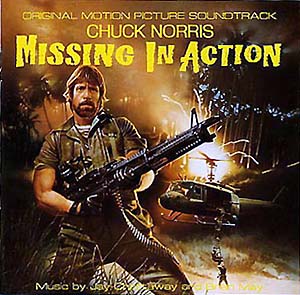
Faz de conta que o pessoal que cá esteve de 2008/09 não estava no Mestrado Integrado. :)
quarta-feira, 15 de julho de 2009

segunda-feira, 29 de junho de 2009
Burocracies live forever
The US standard railroad gauge (distance between the rails) is 4 feet, 8.5 inches. That's an exceedingly odd number.
Why was that gauge used? Because that's the way they built them in England, and English expatriates built the US railroads.
Why did the English build them like that? Because the first rail lines were built by the same people who built the pre-railroad tramways, and that's the gauge they used.
Why did 'they' use that gauge then? Because the people who built the tramways used the same jigs and tools that they used for building wagons, which used that wheel spacing.
Why did the wagons have that particular odd wheel spacing? Well, if they tried to use any other spacing, the wagon wheels would break on some of the old, long distance roads in England, because that's the spacing of the wheel ruts.
So who built those old rutted roads? Imperial Rome built the first long distance roads in Europe (and England) for their legions. The roads have been used ever since.
And the ruts in the roads? Roman war chariots formed the initial ruts, which everyone else had to match for fear of destroying their wagon wheels. Since the chariots were made for Imperial Rome, they were all alike in the matter of wheel spacing.
Therefore the United States standard railroad gauge of 4 feet, 8.5 inches is derived from the original specifications for an Imperial Roman war chariot.
Bureaucracies live forever.
So the next time you are handed a specification/procedure/process and wonder 'What horse's ass came up with it?', you may be exactly right. Imperial Roman army chariots were made just wide enough to accommodate the rear ends of two war horses. (Two horse's asses.)
Now, the twist to the story: When you see a Space Shuttle sitting on its launch pad, there are two big booster rockets attached to the sides of the main fuel tank. These are solid rocket boosters, or SRB's. The SRB's are made by Thiokol at their factory in Utah. The engineers who designed the SRB's would have preferred to make them a bit fatter, but the SRB's had to be shipped by train from the factory to the launch site. The railroad line from the factory happens to run through a tunnel in the mountains, and the SRB's had to fit through that tunnel. The tunnel is slightly wider than the railroad track, and the railroad track, as you now know, is about as wide as two horses' behinds.
So, a major Space Shuttle design feature of what is arguably the world's most advanced transportation system was determined over two thousand years ago by the width of a horse's ass.
And you thought being a horse's ass wasn't important?
Why was that gauge used? Because that's the way they built them in England, and English expatriates built the US railroads.
Why did the English build them like that? Because the first rail lines were built by the same people who built the pre-railroad tramways, and that's the gauge they used.
Why did 'they' use that gauge then? Because the people who built the tramways used the same jigs and tools that they used for building wagons, which used that wheel spacing.
Why did the wagons have that particular odd wheel spacing? Well, if they tried to use any other spacing, the wagon wheels would break on some of the old, long distance roads in England, because that's the spacing of the wheel ruts.
So who built those old rutted roads? Imperial Rome built the first long distance roads in Europe (and England) for their legions. The roads have been used ever since.
And the ruts in the roads? Roman war chariots formed the initial ruts, which everyone else had to match for fear of destroying their wagon wheels. Since the chariots were made for Imperial Rome, they were all alike in the matter of wheel spacing.
Therefore the United States standard railroad gauge of 4 feet, 8.5 inches is derived from the original specifications for an Imperial Roman war chariot.
Bureaucracies live forever.
So the next time you are handed a specification/procedure/process and wonder 'What horse's ass came up with it?', you may be exactly right. Imperial Roman army chariots were made just wide enough to accommodate the rear ends of two war horses. (Two horse's asses.)
Now, the twist to the story: When you see a Space Shuttle sitting on its launch pad, there are two big booster rockets attached to the sides of the main fuel tank. These are solid rocket boosters, or SRB's. The SRB's are made by Thiokol at their factory in Utah. The engineers who designed the SRB's would have preferred to make them a bit fatter, but the SRB's had to be shipped by train from the factory to the launch site. The railroad line from the factory happens to run through a tunnel in the mountains, and the SRB's had to fit through that tunnel. The tunnel is slightly wider than the railroad track, and the railroad track, as you now know, is about as wide as two horses' behinds.
So, a major Space Shuttle design feature of what is arguably the world's most advanced transportation system was determined over two thousand years ago by the width of a horse's ass.
And you thought being a horse's ass wasn't important?
(stolen from Aguanomics)
sexta-feira, 26 de junho de 2009

sexta-feira, 15 de maio de 2009
terça-feira, 5 de maio de 2009
Absinto com Groselha Strikes Back

Harken my fellows! It draws near, the Green Lady dancing in It's wake, hand in hand with her sweet red friend. It's minions busy themselves around white structures heralding It's arrival. Already a hub-bub of expectation can be heard among the denizens of the city, as their exitment grows ever higher as the day of It's arrival comes closer.
..and finaly when the day comes, the people will flock to It and fill It's expanse. It's sounds will boom for miles around It anouncing It's presence to the world! And It's folowers will drown themselves in beer and vodka and other such things, and they shall dance and have sex and shout (sometimes separetaly and sometimes all at the same time) and say and do very foolish things which will be (hopefully) recorded on moving picture machines!
So come ye, come ye all! Come to this Land of Wonder, and douse your thirst for Absinthe and Groselha amongts your peers! For the time is nigh! The Semana Academica is upon us!
sábado, 4 de abril de 2009
Paranoia is the fuel that makes the world go round. Or at least, that's what they want you to think. In reality, it's the aliens from Mars that cause the world to rotate, and the day they leave us is the day we spin out of control and have all our work flung at top speed into the sun. ...Or something like that.
Subscrever:
Mensagens (Atom)
